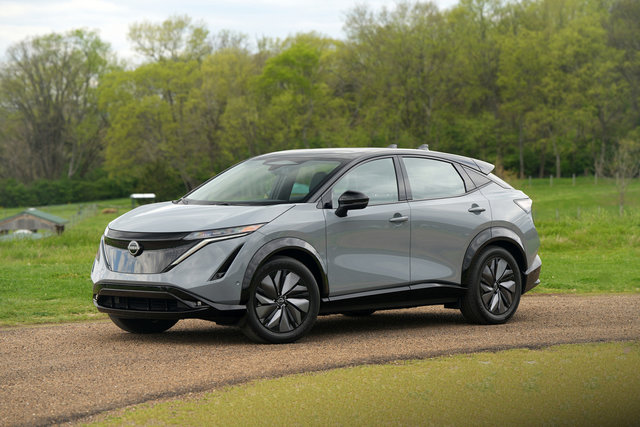
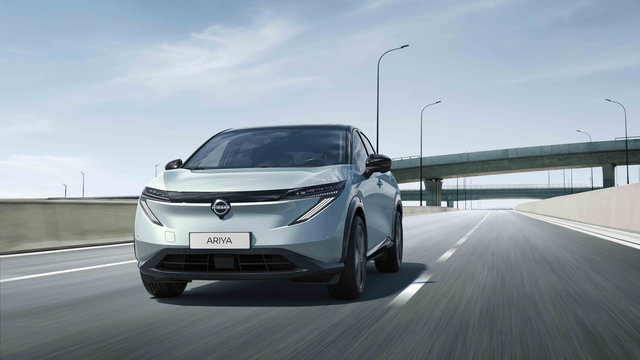
Most all-wheel drive systems are reactive — they detect wheel slip and then redistribute power to compensate. Nissan's e-4ORCE, the dual-motor AWD system fitted across the ARIYA e-4ORCE lineup, works differently. It manages torque distribution proactively and continuously, rather than waiting for something to go wrong before stepping in. For drivers in New Brunswick who deal with icy intersections, wet highway ramps, and unpacked backroads from fall through spring, that distinction has real day-to-day meaning.
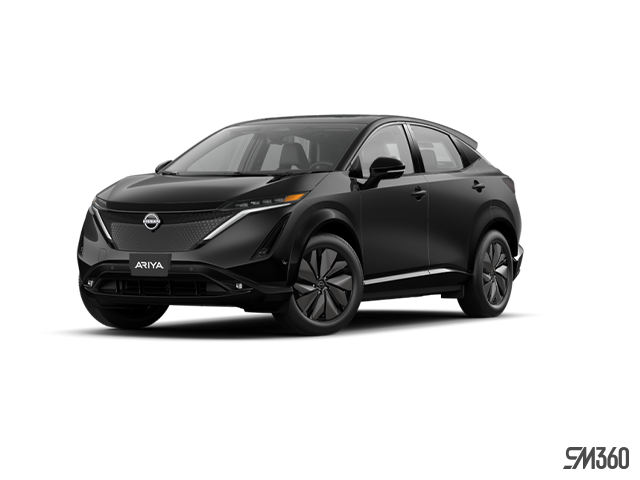
The 2026 ARIYA is available in New Brunswick exclusively in e-4ORCE AWD configurations: the SL e-4ORCE, the SL+ e-4ORCE, and the Platinum+ e-4ORCE. Here is a detailed look at how the system is engineered and what that translates to behind the wheel.
The Dual-Motor Setup
The e-4ORCE system places one electric motor at the front axle and a second at the rear. These are not a single motor driving all four wheels through a centre differential — each axle has its own dedicated motor, which means the system can independently command torque at the front and rear without any mechanical link between them.
The ARIYA SL e-4ORCE uses a 66 kWh total battery (63 kWh usable) and produces 335 hp and 413 lb-ft of torque. The SL+ e-4ORCE and Platinum+ e-4ORCE step up to a 91 kWh battery (87 kWh usable) and produce 389 hp and 442 lb-ft of torque. All three trims run Dual Externally Excited Synchronous Motors (EESM).
|
Grade
|
Battery
|
Horsepower
|
Torque
|
|
SL e-4ORCE
|
66 kWh (63 kWh usable)
|
335 hp
|
413 lb-ft
|
|
SL+ e-4ORCE
|
91 kWh (87 kWh usable)
|
389 hp
|
442 lb-ft
|
|
Platinum+ e-4ORCE
|
91 kWh (87 kWh usable)
|
389 hp
|
442 lb-ft
|
What Happens During Cornering
This is where the e-4ORCE system does its most notable work. Electric motors can adjust their output far faster than any mechanical system, and the ARIYA uses this to its advantage through corners. As the driver initiates a turn, the system adjusts the front-to-rear torque split to help keep the vehicle balanced and the steering feel predictable. The goal is a flat, composed arc through the corner rather than the understeer — the feeling of the front wheels not quite tracking where you aim them — that can occur in front-heavy electric crossovers.
For Fredericton driving, think of the left-turn-on-red at the end of a slippery ramp, or the long curve on Route 8 heading north in mixed conditions. The e-4ORCE is calculating the right torque distribution through that entire arc, continuously.
Regenerative Braking and Stability
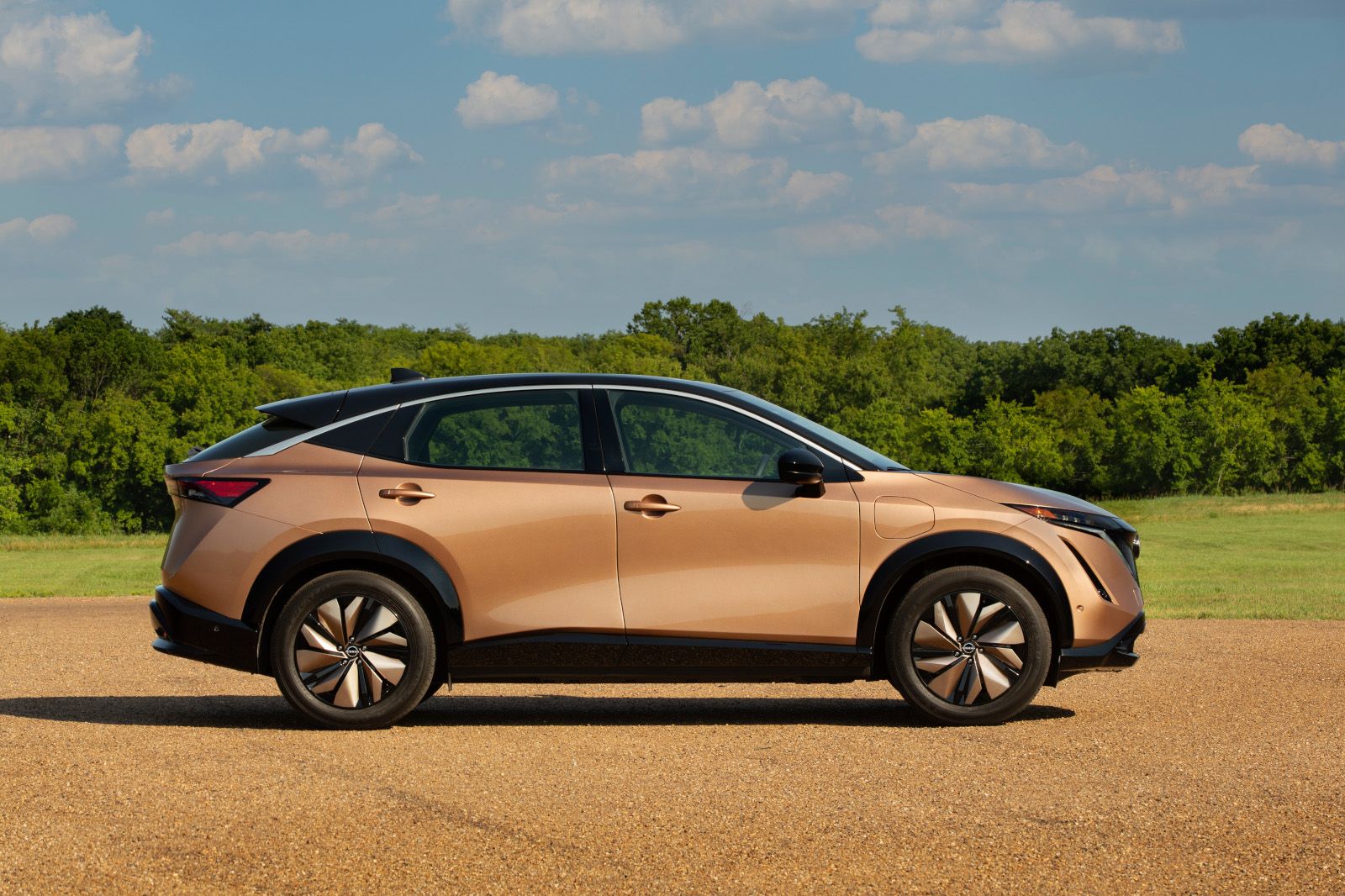
The e-4ORCE system uses both motors during deceleration to recover energy back into the battery. Critically, it manages regenerative braking at each axle independently, which helps keep the vehicle balanced when lifting off the throttle. A single-motor setup that only regenerates at one axle can create a braking bias that feels abrupt or unsettled on slippery surfaces. With e-4ORCE, the regeneration is distributed front and rear to maintain composure.
The ARIYA e-4ORCE also features an e-Step mode within its braking system, which provides strong, progressive regeneration for drivers who prefer to slow primarily with the accelerator pedal. This is available across all three e-4ORCE trims.
Drive Modes and Winter Performance
Four drive modes are available on all ARIYA e-4ORCE grades: Normal, ECO, Sport, and Snow. The Snow mode adjusts the system's torque delivery to reduce wheel spin during acceleration on low-traction surfaces — a mode that gets real use during a New Brunswick winter.
The battery is liquid-cooled and includes a standard battery heater, which maintains the pack's operating temperature in cold weather. This directly affects real-world range and performance in winter, since a cold lithium-ion battery delivers less usable energy. The thermal management system works to keep the pack in its effective operating range, which means the performance figures stay closer to specification on cold mornings than in vehicles without active thermal management.
Charging speed at the SL e-4ORCE is 35 minutes from 10% to 80% at 130 kW DC. At the SL+ and Platinum+ level, the larger 91 kWh pack takes 40 minutes for the same charge window. Level 2 charging runs 10.5 hours for the SL and 14 hours for the larger-battery trims.
Suspension and Handling Foundation
The ARIYA e-4ORCE sits on an independent strut front suspension with coil springs and a hollow 23.4 mm stabilizer bar, paired with an independent multi-link rear with a hollow 28.6 mm stabilizer bar. The suspension setup is designed to complement the e-4ORCE system's torque management — keeping the body flat and the wheels in consistent contact with the road.
Ground clearance is 170 mm (6.7 in), which is appropriate for an urban and highway-focused crossover. The steering is electric power-assisted with vehicle-speed variable assist and a 13.9:1 overall ratio — quicker than many mid-size crossovers — and the wheel is haptic-enabled across all e-4ORCE trims.
Safety Technology That Works With AWD
Nissan Safety Shield 360 is standard across all ARIYA e-4ORCE grades, including Automatic Emergency Braking with Pedestrian Detection, Blind Spot Warning, Intelligent Blind Spot Intervention, Rear Cross Traffic Alert, Lane Departure Warning, Intelligent Lane Intervention, and Rear Automatic Braking. ProPILOT Assist with Navi-link is standard on SL e-4ORCE and SL+, with ProPILOT Park standard on the Platinum+.
The combination of the e-4ORCE's active torque management and the full Safety Shield suite means the vehicle is working to prevent instability before it escalates and responding to hazards it can detect — two separate layers of protection that operate independently.
Experience the ARIYA e-4ORCE at Fredericton Nissan
The 2026 ARIYA e-4ORCE is on sale now. If you'd like to get a firsthand sense of how the system performs on New Brunswick roads, the team at Fredericton Nissan can arrange a test drive at a time that works for you. Reach out or stop in — we'll match you with the e-4ORCE grade that fits your driving and your budget.