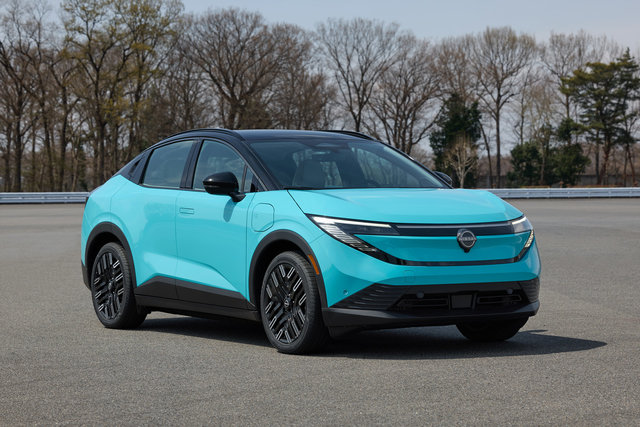
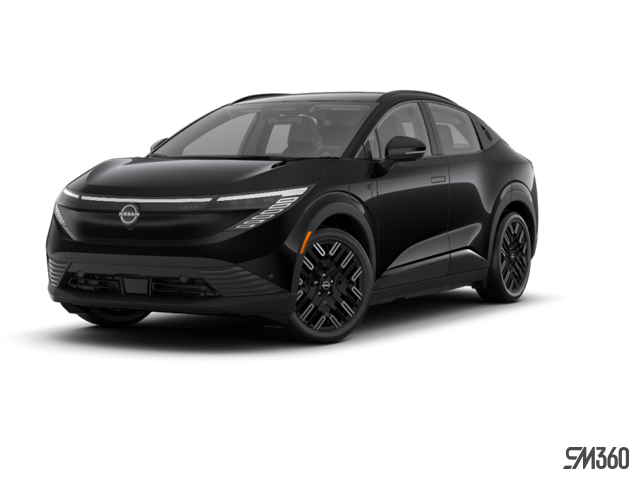
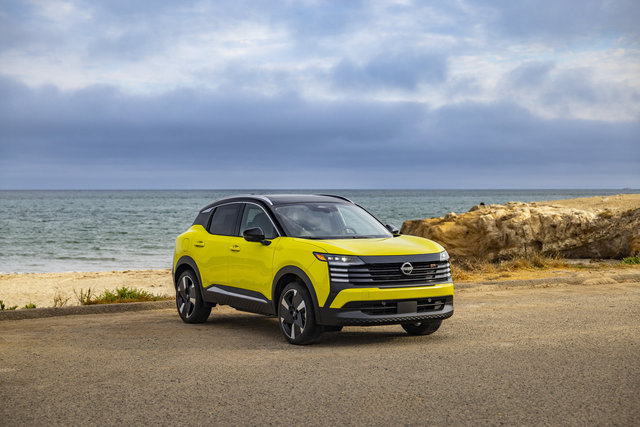
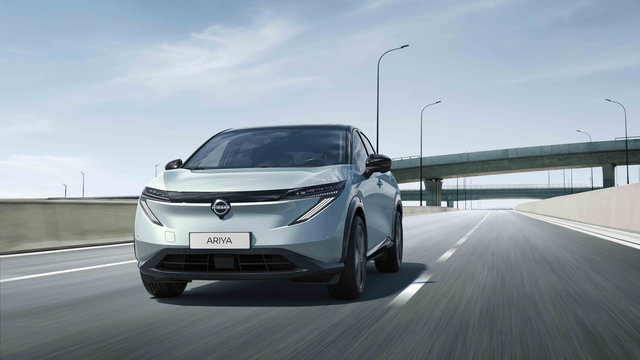
If your current vehicle is a subcompact SUV — something in the size class of a Kicks — and you're thinking about what comes next, the all-new 2026 Nissan LEAF deserves a serious look. It's not an obvious swap. Going from a small crossover to an electric vehicle raises genuine questions about space, range, charging, and everyday practicality. This article works through those questions honestly, so you can decide if the LEAF fits the way you actually drive in and around Fredericton.
The 2026 LEAF is a fully redesigned vehicle — Nissan's third-generation model — and it's a significant departure from both the previous LEAF hatchback and the subcompact SUV segment. It's larger, taller, and offers more cargo room than what came before, while running entirely on electricity. Here's what that looks like in practice.
How the Space Compares
One of the first things a subcompact SUV driver notices when stepping into the 2026 LEAF is that it's grown. The previous-generation Kicks (2018–2024 era) measured 4,309 mm in length with a cargo area of 716.4 litres behind the second row. The all-new 2026 LEAF measures 4,407 mm in overall length, and cargo volume behind the second row comes in at 566 litres — which is less than the older Kicks with seats up. However, fold the rear seats down and the LEAF opens up to 1,571 litres, compared to 914.6 litres in the previous-gen Kicks. So for hauling larger items, the LEAF has the advantage.
Interior headroom in the 2026 LEAF is 39.9 inches (1,013 mm) up front, compared to 1,027 mm in the previous-gen Kicks — essentially the same. Rear headroom in the LEAF is 37.2 inches (945 mm) without the moonroof option, and 36.6 inches (930 mm) with it. The previous-gen Kicks offered 977 mm of rear headroom. The LEAF's rear headroom is slightly less, but not dramatically so.
Second-row legroom is where the LEAF falls notably shorter — 31.8 inches (808 mm) versus 824 mm in the previous-gen Kicks. This matters if you regularly carry taller adult passengers in the back seat. For families with younger children or for primarily two-passenger driving, it's unlikely to be a daily concern.
|
Dimension
|
Previous-Gen Kicks (2021–2023)
|
2026 Nissan LEAF (S+/SV+/PLATINUM+)
|
|
Overall length
|
4,309 mm
|
4,407 mm
|
|
Cargo (seats up)
|
716.4 L
|
566 L
|
|
Cargo (seats folded)
|
914.6 L
|
1,571 L
|
|
Front headroom
|
1,027 mm
|
1,013 mm
|
|
Rear headroom
|
977 mm
|
945 mm (no roof)
|
|
Rear legroom
|
824 mm
|
808 mm
|
What You Gain: Range and Charging
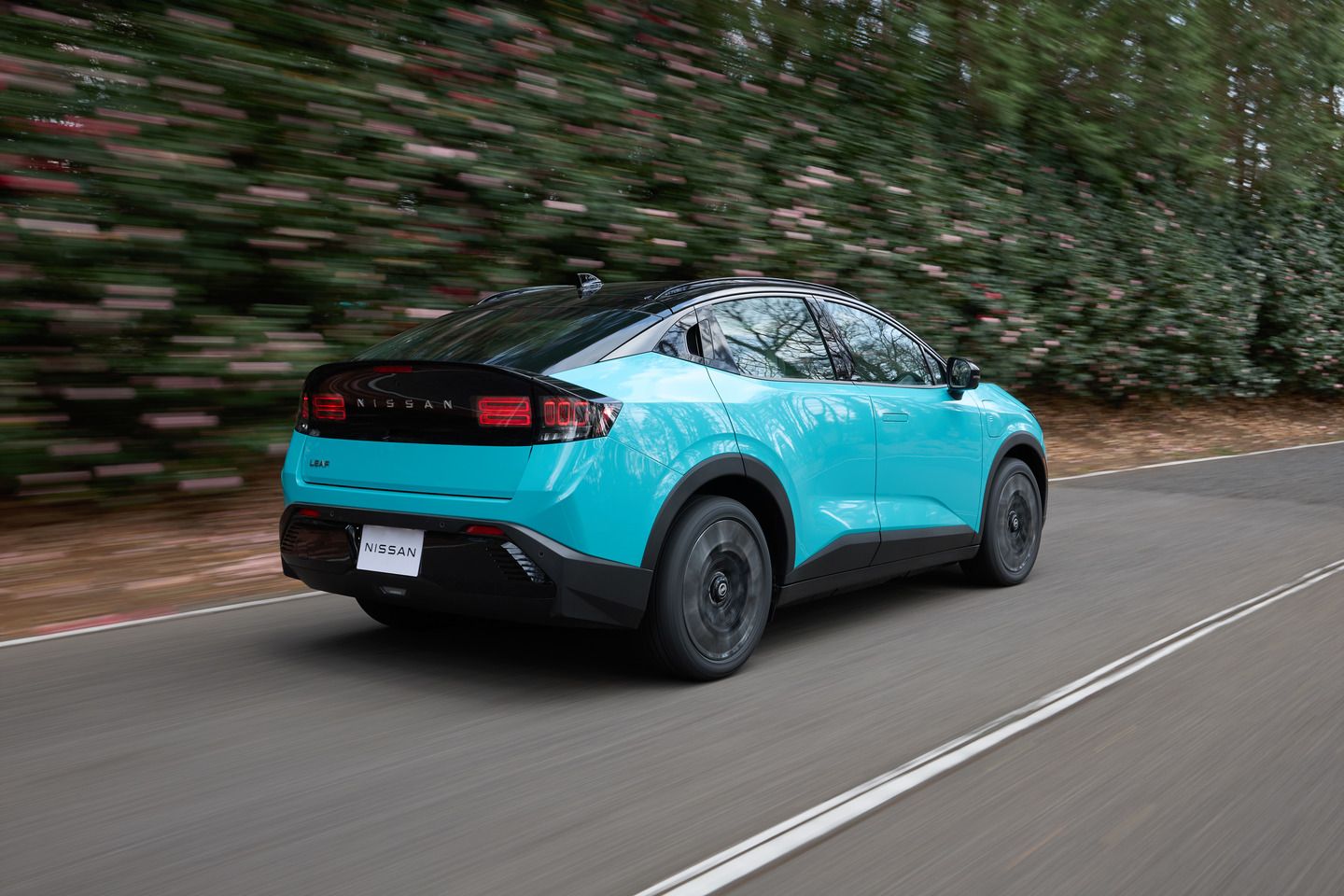
The S+, SV+, and PLATINUM+ trims of the 2026 LEAF are powered by a 75 kWh battery paired with a 214 hp electric motor producing 261 lb-ft of torque. Estimated driving range reaches up to 488 kilometres per charge — more than enough for commuting throughout Fredericton and making the run to Moncton or Saint John without a second thought.
Charging is handled through two ports. A J1772 port on the driver's side covers home charging and Level 2 public stations, while a North American Charging Standard (NACS) port on the passenger side gives access to the Tesla Supercharger network. Rapid charging from 10% to 80% takes approximately 35 minutes at a compatible fast charger. The LEAF also supports Plug & Charge — simply connect at a compatible public charger and the session starts automatically with no app required.
For New Brunswick winters, the 2026 LEAF is equipped with an enhanced battery thermal management system, a heat pump for cabin heating, and a battery heater the driver can activate before charging in cold weather. These aren't afterthoughts — they're systems specifically engineered to maintain predictable range and charging performance when temperatures drop.
The Entry Point: LEAF S
The base LEAF S uses a smaller 53 kWh battery and a 174 hp motor, offering a more accessible price point for drivers who don't need maximum range. This trim is well-suited to drivers whose daily routine keeps them within the city and surrounding area, where a full charge comfortably covers several days of typical driving. Pricing for the LEAF S will be announced separately at a later date.
For drivers who want the full 488 km range, the LEAF S+ starts at CA$44,998 MSRP. The SV+ is CA$47,998 and the PLATINUM+ is CA$52,798.
Technology Inside the Cabin
The 2026 LEAF SV+ and PLATINUM+ grades feature dual 14.3-inch displays — significantly larger than the infotainment screens found in the previous Kicks generation. Google built-in is available, bringing Google Maps with an Intelligent Route Planner that factors in charging stops on longer trips. The LEAF also includes 3D Intelligent Around View Monitor, Invisible Hood View, and Front Wide View camera technologies as standard — none of which were available in the entry-level previous-gen Kicks.
Safety Shield 360 is standard across all LEAF trims, covering Automatic Emergency Braking, Blind Spot Warning, Blind Spot Intervention, Rear Cross Traffic Alert, Lane Departure Warning, and Intelligent Lane Intervention.
Is the LEAF the Right Move for You?
If your daily driving is mostly within Fredericton — work, errands, school runs — and you occasionally make longer trips within New Brunswick, the 2026 LEAF S+ or SV+ covers the ground comfortably. You gain a significantly larger fold-flat cargo floor than the previous-gen Kicks, a modern technology suite, and the convenience of charging overnight at home. The trade-offs are a slightly tighter rear seat and smaller upright cargo volume.
For drivers who primarily carry two people and value the efficiency and lower running costs of an EV over the maximised upright cargo space of a small crossover, the LEAF makes a strong case.
The team at Fredericton Nissan can walk you through which LEAF trim fits your routine — and help you understand what home charging looks like if you haven't made the switch to electric before. Stop in and we'll work through it together.