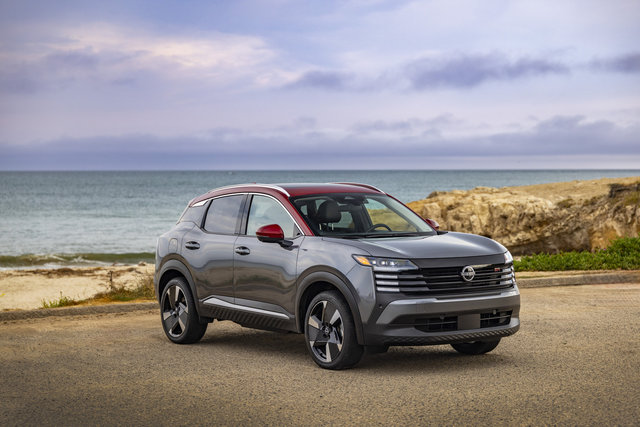
Choosing a drivetrain shouldn’t feel like guesswork. If you’re cross-shopping the 2026 Nissan Kicks in New Brunswick, the front-wheel drive versus Intelligent All-Wheel Drive question comes down to your actual commute, not a spec sheet.
This guide answers the practical questions that matter before you decide.
What Does Intelligent All-Wheel Drive Actually Change on the Kicks?
Intelligent All-Wheel Drive is a traction tool, not a horsepower upgrade. The Kicks’ 2.0 L four-cylinder engine makes 141 hp and 140 lb-ft of torque paired with an Xtronic transmission, and that output doesn’t change between FWD and AWD versions.
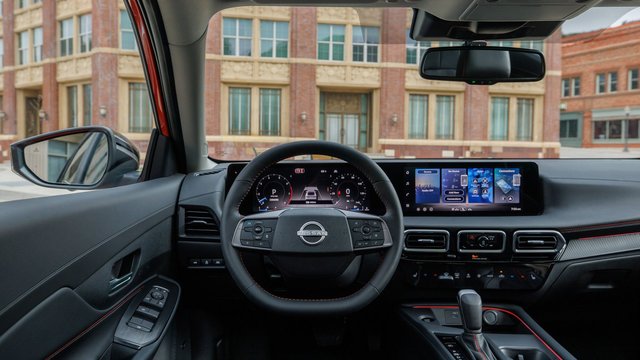
What changes is how power reaches the road. AWD models add a Snow setting to the Drive Mode Selector, joining Normal, Eco, and Sport. That mode adjusts how the system manages wheel slip on loose or slick surfaces.
AWD does not remove the driver’s job of adjusting speed and following distance for conditions. It’s a support system for traction, not a substitute for careful driving.
Is Front-Wheel Drive Enough for Everyday Commuting in New Brunswick?
For drivers whose routine is mostly paved roads, cleared highways, and in-town errands, FWD covers that use case well. The FWD Kicks S and SV post slightly better fuel economy: 8.1 L/100 km city and 6.6 L/100 km highway, versus 8.5 and 6.9 L/100 km with AWD.
If your commute rarely takes you onto unplowed side streets or rural routes, FWD is the simpler, more efficient choice. Simplicity here isn’t a compromise; it’s the right fit for a mostly-paved routine.
When Does AWD Make the Bigger Difference on New Brunswick Roads?
The picture shifts for drivers who regularly face wet, snowy, or slushy pavement, or who travel secondary and rural roads that see less consistent plowing. That’s where AWD’s added traction control becomes relevant on a daily basis rather than an occasional one.
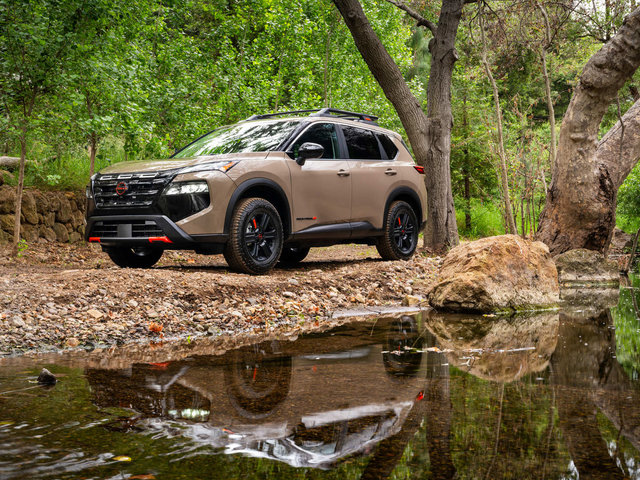
There’s a real difference between hitting adverse weather a few times a season and driving through it most winter mornings. A driver who crosses gravel shoulders, unpaved driveways, or backroads regularly will use the AWD system far more than someone who mainly sees cleared arterial roads.
The Kicks’ 214.2 mm of ground clearance supports this kind of driving too, giving a bit more room over ruts, packed snow, and uneven shoulders than a low-riding car.
What Tradeoffs Come With Choosing AWD?
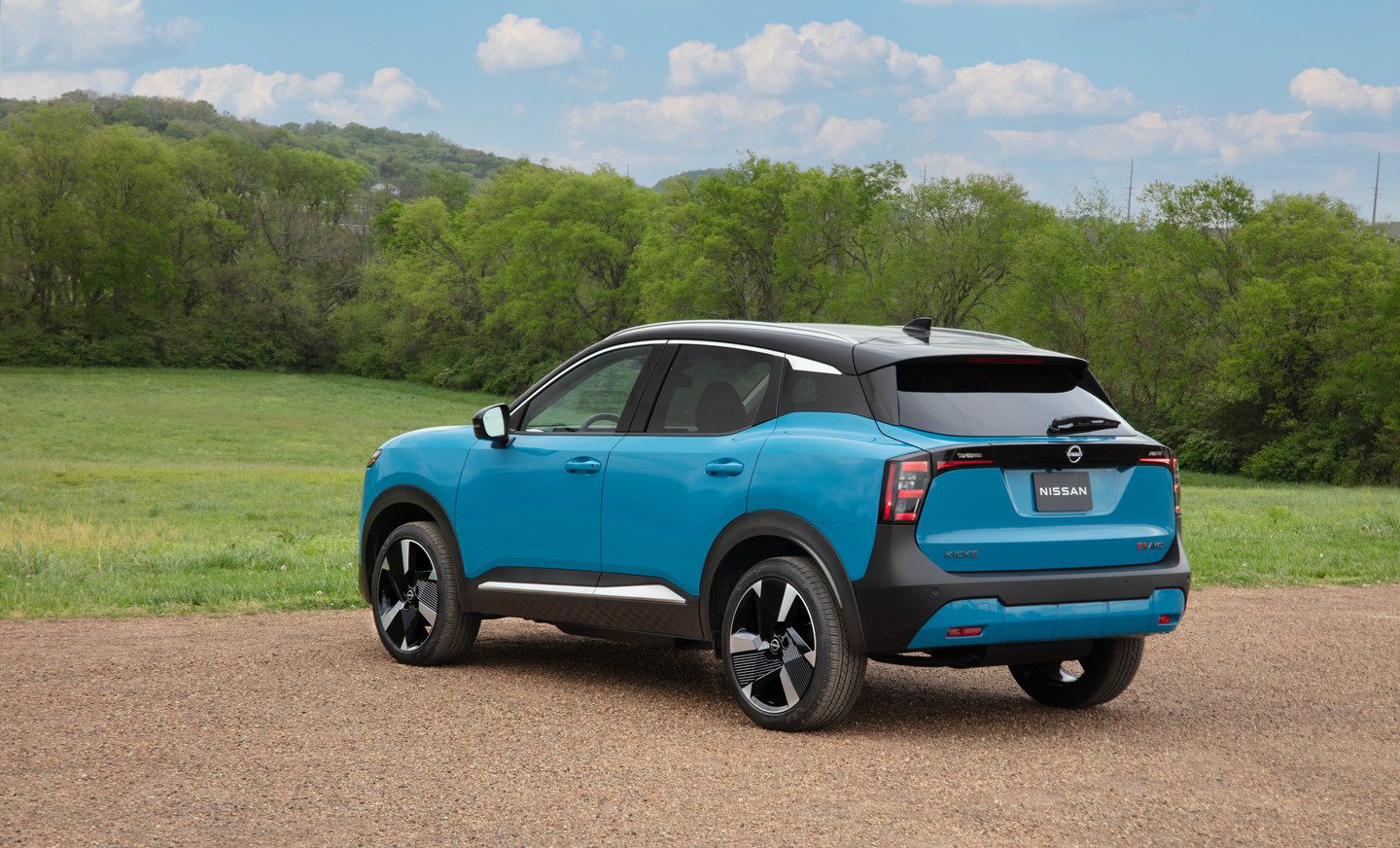
AWD adds mechanical complexity, and on the Kicks that shows up mainly as the fuel economy gap noted above: roughly 0.4 L/100 km city and 0.3 L/100 km highway compared with FWD. Over a year of typical driving, that’s a modest but real cost.
The honest question is whether you’ll use the extra capability often enough to justify it. A driver who only sees a handful of snow events a winter may not get much return on the added complexity. A driver on rural or secondary roads through a full New Brunswick winter likely will.
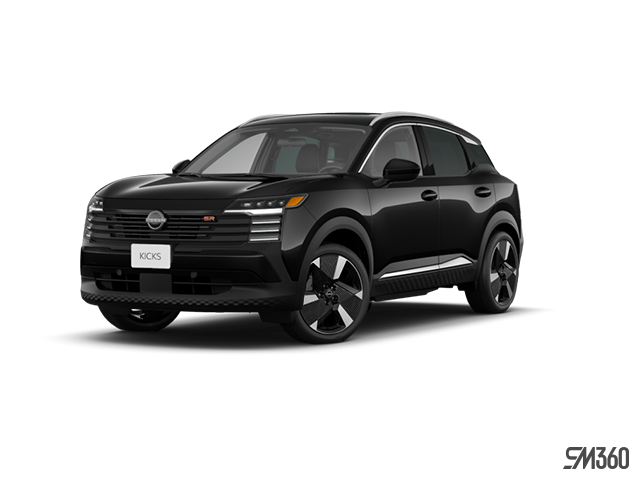
One more note on trims: the SR grade comes only with AWD, so that tradeoff isn’t optional if the SR’s equipment list is what you want. The S and SV offer a choice between FWD and AWD.
What Other Features Support Confidence Behind the Wheel?
AWD isn’t the only system built around driver confidence on the 2026 Kicks. Nissan Safety Shield 360 is standard across every grade, bundling forward collision warning, automatic emergency braking, blind spot warning, and rear cross traffic alert.
The SR grade adds ProPILOT Assist, which provides steering support to help hold a lane position on the highway, along with the Intelligent Around View Monitor for a wider view while parking or manoeuvring in tight spaces. These features work alongside AWD rather than replacing what it does for traction.
Quick Answers at a Glance
- Mostly paved commute, occasional weather: FWD covers it, with a small fuel economy edge.
- Regular secondary roads or unplowed routes: AWD’s added traction is used more often, worth the tradeoff.
- Fuel economy difference: about 8.1/6.6 L/100 km (FWD) versus 8.5/6.9 L/100 km (AWD), city/highway.
- Ground clearance: 214.2 mm across the lineup, a factor on rough or snow-packed surfaces regardless of drivetrain.
How to Decide Which Kicks Fits Your Routine
Run through a short self-check. How often does your commute leave main roads for secondary routes or unplowed streets? How comfortable are you adjusting your driving style in slush or on packed snow? Would the added traction get regular use, or mostly sit unused?
If your answers point to frequent mixed-condition driving, AWD earns its keep. If your routine stays largely on cleared, paved roads with occasional weather, FWD is the more practical pick, and you’ll save a bit at the pump doing it.
Talk Through Your Drive With Fredericton Nissan
The 2026 Kicks offers both FWD and AWD depending on grade, each suited to a different kind of daily driving. Ground clearance, drive modes, and standard driver-assist tech all factor into which setup fits your routine best.
Visit Fredericton Nissan in Fredericton to compare the FWD and AWD Kicks in person and talk through the roads and conditions you actually drive most.